
Our university began offering instruction in 1911 under the name "Conductor School," based on the curriculum of the "École de Conducteurs" in Paris, and operating under the Ministry of Public Works. In 1925, the school was renamed the “Nafia Science School.” In 1937, it was reorganized and transferred to the Ministry of National Education, continuing its educational activities as the “Technical School.” Initially offering only the Departments of Civil Engineering and Mechanical Engineering, the school added the Departments of Electrical Engineering and Architecture beginning in the 1942–1943 academic year. In 1943, it was transformed into a four-year higher education institution. On June 3, 1969, the Technical School was reorganized as the “Istanbul State Academy of Engineering and Architecture,” acquiring the status of an institution dedicated to both education and research. On July 20, 1982, the Istanbul State Academy of Engineering and Architecture and the Kocaeli State Academy of Engineering and Architecture were merged to form YILDIZ UNIVERSITY. On July 11, 1992, the Kocaeli Faculty of Engineering and the Kocaeli Vocational School were separated from Yıldız University, and the university’s name was changed to YILDIZ TECHNICAL UNIVERSITY.
The Department of Electrical and Communications Engineering has been offering instruction since 1982. Initially located on the Yıldız Campus, our department moved to the Ayazağa Campus in 1984. In 1998, the department moved back to the Yıldız Campus. A new building was constructed for the department at Davutpaşa, the university’s new campus, and the department moved into this building in August 2011. With its continuously improving physical infrastructure and faculty and staff, the department provides higher education opportunities to 113 students each year through the ÖSYM. It currently educates 713 undergraduate students. The curriculum is in Turkish; however, beginning with the 2010–2011 academic year, it has been conducted with 30% English support in accordance with the guidelines established by the Higher Education Council (YÖK). Until 2005, graduates who completed the four-year undergraduate program were awarded a “Electronic and Communication Engineer” degree; but starting with the 2005–2006 academic year, in accordance with the recommendation of the Inter-University Council and a decision by YÖK, diplomas began to be issued with the notation “Has completed the Bachelor’s Degree Program in Electronics and Communications Engineering.” In 2003, as part of the university-wide Continuous Improvement in Education Quality Project (EKSIP), the curriculum was updated and the USIS 2003 curriculum was implemented. Subsequently, the curriculum underwent further developments with the introduction of USIS 2010, USIS 2013, and most recently, USIS 2018. With the USIS 2010 curriculum, the department received a 5-year MÜDEK accreditation in 2011; however, no reapplication was made upon the expiration of the accreditation period. The aim of our department is to train “Electronics and Communications Engineers” who can contribute to the rapid technological development of the electronics and communications industries at both the national and international levels. To this end, the curriculum is continuously updated to keep pace with evolving technology. Compliance with the Bologna Process was achieved through USIS 2013, and with USIS 2018, the department transitioned to an educational plan designed to meet MÜDEK accreditation requirements. Under this plan, students are first offered a common curriculum consisting of certain required core courses; they are then guided to specialize according to their career plans by taking several social elective courses as well as numerous professional elective courses. Students are then guided to specialize according to their career plans through elective courses.
Our Department Chairs
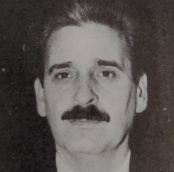
- Term of Office: 1982–1982
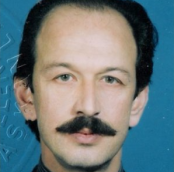
- Term of Office: 1982–1996
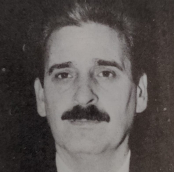
- Term of Office: 1996–2004
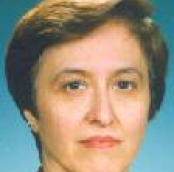
- Term of Office: 2004–2010

- Term of Office: 2010–2013
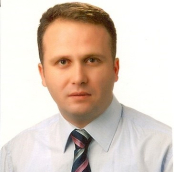
- Term of Office: 2013–2016
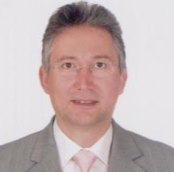
- Term of Office: 2016–2022
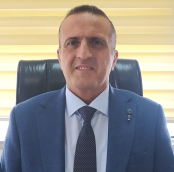
- Term of Office: 2022–Present